
Rio Witnesses Deadliest Police Operation: 64 Killed in Massive Favela Raid
Over 2,500 Officers Storm Red Command Stronghold as Governor Declares ‘War on Narco-Terrorism’

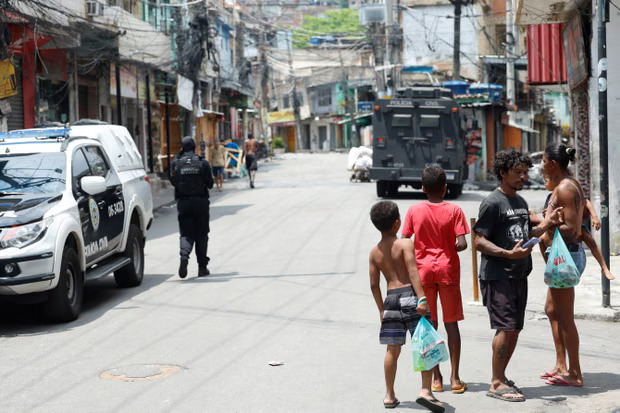
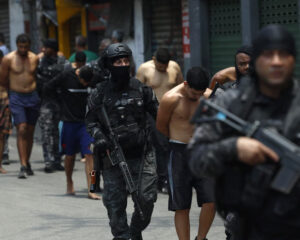
At least 64 people were killed in Rio de Janeiro’s deadliest day of violence after more than 2,500 police officers and special forces launched a large-scale raid on a cluster of favelas near the city’s international airport, long regarded as the headquarters of the Red Command, one of Brazil’s most powerful organised crime groups.
The pre-dawn raid, which began around 4 a.m., triggered hours of intense gun battles across the Alemão and Penha favelas, home to an estimated 300,000 residents. Authorities said the operation was aimed at dismantling criminal networks involved in drug trafficking, arms smuggling, and organised violence.
According to police sources, Red Command gunmen retaliated with heavy fire, setting vehicles and barricades ablaze to slow the advance of civil and military police units. In a first for Rio, the gang reportedly used weaponised drones to drop explosives on special forces teams during the confrontation.
By afternoon, at least 64 people, including four police officers, were confirmed dead. Local hospitals reported a steady stream of gunshot victims throughout the day, while community leaders described “bodies strewn across the streets.”
“There are bodies all over the alleys. It’s like a war zone,” one resident told O Globo newspaper.
Authorities said eight police officers and four civilians were injured in the fighting. Graphic images circulating on social media showed several young men among the dead, intensifying public outrage and calls for an independent investigation into the scale of police violence.
Rio’s right-wing governor, Cláudio Castro, defended the operation, calling it a necessary response to escalating criminal control in the city’s northern zones.
“This is no longer common crime—it’s narco-terrorism,” Castro said in a video statement, adding that the state was “at war” against organised drug factions.
Officials confirmed that more than 80 suspects were arrested and 93 automatic rifles were seized during the operation, along with large quantities of ammunition and explosives. The seizure underscores the formidable arsenal Rio’s drug gangs have accumulated since the late 1980s, when narcotics networks began tightening their grip over the favelas.
Human rights groups have long criticised Rio’s heavy-handed security operations, which often result in high civilian casualties. The latest raid, however, marks an unprecedented escalation in violence, surpassing the infamous 2010 Complexo do Alemão operation, previously considered the city’s largest.
As authorities continue to assess the aftermath, questions remain over the proportionality of force used, the impact on local communities, and whether such operations can deliver lasting security in Brazil’s most volatile urban regions.